
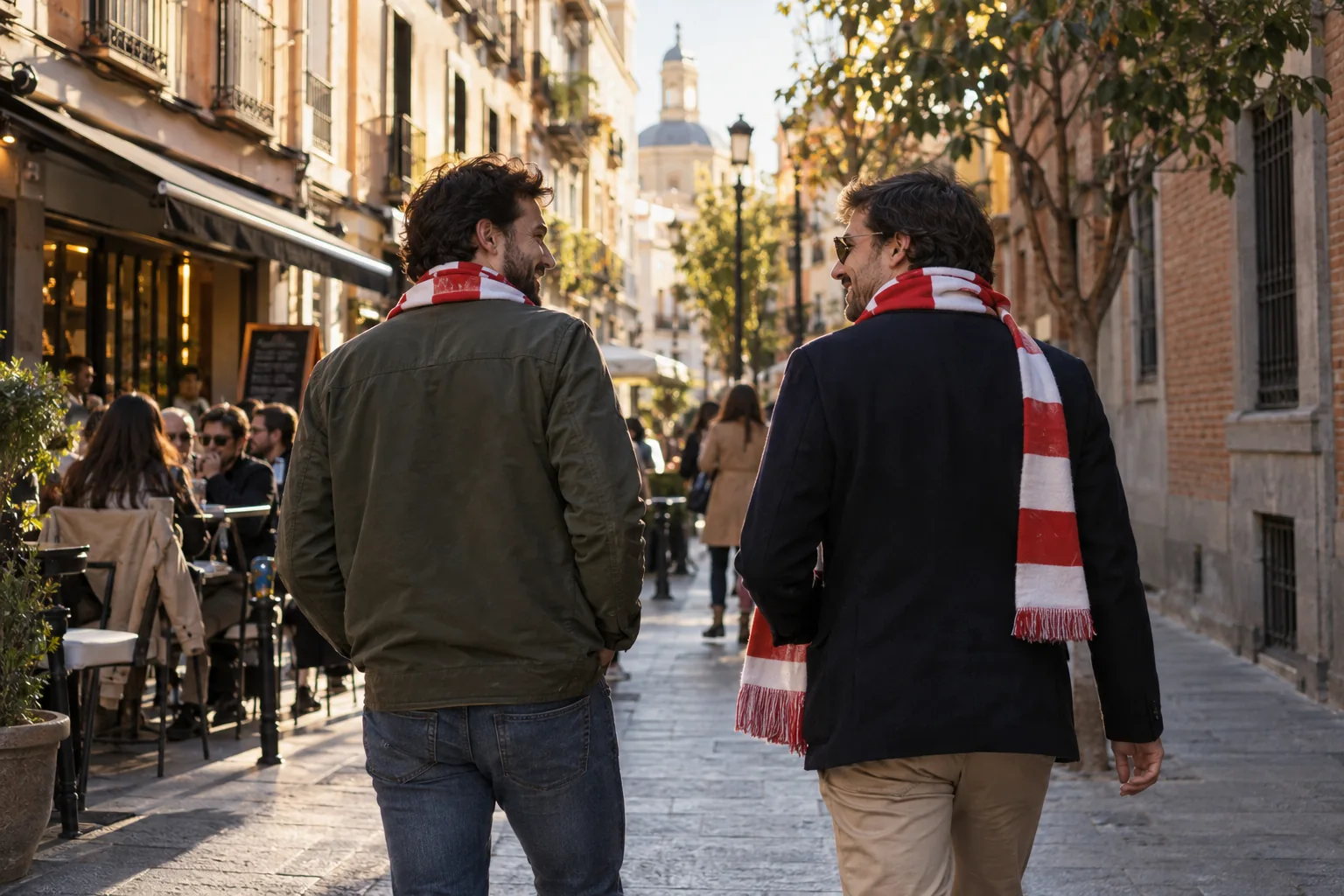
AI-generated editorial illustration of supporters in an urban setting; it does not document an Atlético match or a specific location.
Updated: 16 October 2026
Atlético de Madrid has its own distinct place in the football history of the Spanish capital. Understanding it starts with separating the club’s different periods, grounds and competitions. Red-and-white colours may connect generations, but every photograph and result belongs to a particular date. These documented milestones offer a useful starting point.
A Madrid beginning in 1903
The club dates its foundation to 26 April 1903, when young Basque students in Madrid established Athletic Club de Madrid. That original name is worth remembering when reading old reports. A different name in an archive does not necessarily refer to a different team.
When sharing a historical story, keep the name used at the time and explain its date. There is no need to turn each institutional change into a legend or attach a secret meaning to every badge detail. Our guide to football crests and their documented symbols offers a practical way to look more closely.
Two Metropolitanos, with the Calderón between them
The old Metropolitano was part of the club’s life from 1923 to 1966. The present stadium opened in 2017 and recalled that earlier reference in its name. These are different grounds. Between those periods, the Vicente Calderón became a central setting for supporters’ memories.
The distinction matters when planning a visit or identifying a picture. A stand, address or transport recommendation for the former ground does not automatically apply to the present one. Check the venue and the official directions for the event you intend to attend, rather than relying on an undated guide.
From the first league title to a European trophy
Atlético won its first league championship in 1939/40 and retained it in 1940/41. The club recalls that the first title was secured on 28 April 1940 in Vallecas, with Ricardo Zamora as coach. Keeping that context prevents a later stadium from being attached to an earlier achievement.
The first European trophy was the 1962 Cup Winners’ Cup. The final required a replay: on 5 September, Atlético beat Fiorentina 3–0 in Stuttgart. The September date makes sense when the replay is identified. Historical competition schedules do not always follow the pattern a present-day reader expects.
The 1996 double and the wider story
The 1995/96 league title and the 1996 Spanish Cup make up the double that remains a defining reference for Atlético supporters. They were separate competitions won during the same campaign. Naming both accurately preserves the memory without turning a historical article into a claim about the club’s current trophy total.
If this history inspires a football visit, start with Ticketfan’s English website and check the specific event and offer conditions. A match ticket and a stadium visit need separate checks for inclusions and timing. You can also explore Real Madrid’s origins to discover a different club story within the same city. Historical results do not establish a future fixture or ticket availability.